
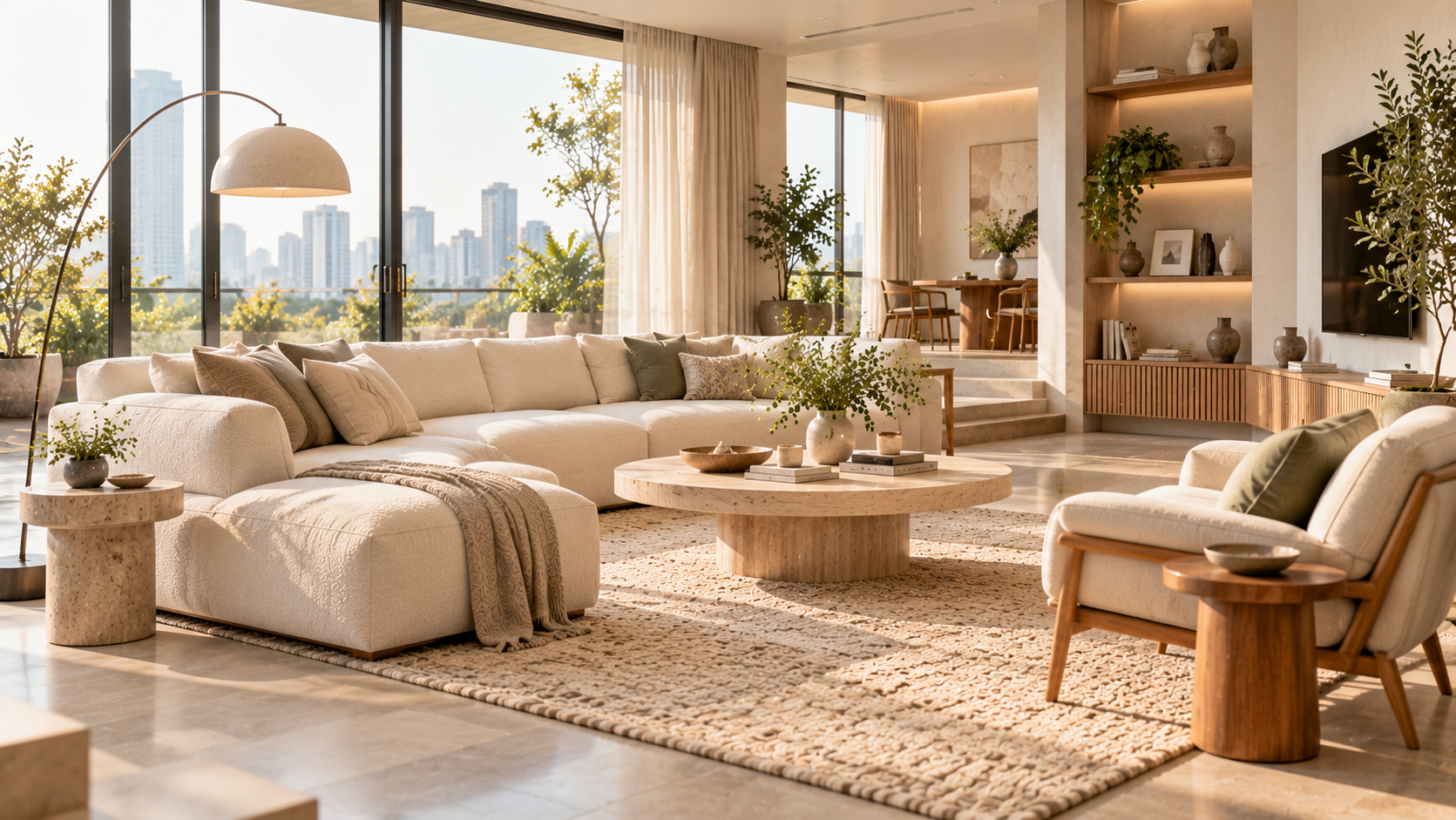
The Role of Proportion in Luxury Furniture Styling
A room can contain beautifully designed pieces and still feel unsettled. The difference often comes down to proportion — the relationship between the size of furniture, the available space and how each element connects with the others.
In refined interiors, furniture styling is not only about selecting individual pieces. It is about understanding scale, spacing and visual balance. A sofa that dominates a room, a coffee table that feels disconnected or a chair placed without enough breathing space can affect the entire experience.
This is why proportion plays such an important role when working with luxury furniture. The strongest interiors are not defined by the number of pieces they contain, but by how naturally those pieces work together.
Understand Scale Before Selecting Furniture
Every room has its own architectural character. Ceiling height, floor area, natural light and existing features influence how furniture should be introduced.
A large living room may require substantial seating to maintain balance, while a compact space may benefit from lighter forms that preserve openness.
Before choosing furniture, consider the relationship between the room and the piece itself. A generously sized sofa can create comfort in a spacious setting, but the same piece may restrict movement in a smaller area.
This understanding forms the foundation of thoughtful furniture placement.
Create Balance Between Large and Small Elements
A well-composed room rarely relies on furniture of the same scale.
Large pieces establish the foundation, while smaller elements add detail and flexibility. A sofa may be balanced by a pair of chairs. A substantial dining table may be complemented by lighter seating. A tall storage unit may need lower pieces nearby to maintain visual rhythm.
This approach creates a more layered composition where every object has a clear role.
A balanced mix of proportions is essential for balanced interior design, allowing the room to feel complete without appearing crowded.
Let Furniture Placement Guide Movement
Good interiors are designed around how people move through them.
The distance between a sofa and coffee table, the clearance around dining chairs and the pathways between different zones all affect how comfortable a room feels.
Effective furniture arrangement considers everyday use first. A beautiful layout should still allow people to walk naturally, sit comfortably and interact with the space.
In open-plan homes especially, furniture placement helps define different areas without relying on physical walls.
Explore RAVOH's sofa collection, tables collection and chairs collection to understand how different proportions work together across living and dining spaces.
How Italian Furniture Uses Proportion
The influence of italian furniture comes largely from its attention to proportion and detail.
Italian design often focuses on achieving harmony between structure and comfort. A chair’s curve, the thickness of a tabletop or the relationship between upholstery and frame can significantly change how a piece is perceived.
Rather than relying on excessive decoration, well-designed pieces allow proportion, material and craftsmanship to create their impact.
The Museum Collection by RAVOH reflects this approach, bringing together materials such as marble, veneer, leather and metal through carefully considered forms.
Avoid Overcrowding Through Intentional Spacing
One of the most common mistakes in interior styling is filling every available area.
Empty space allows furniture to be appreciated. It creates visual pauses and helps important pieces stand out.
A statement chair needs enough room around it for its silhouette to be noticed. A coffee table needs clearance around it to support movement. A console looks more intentional when it has enough wall space to establish its presence.
Good furniture styling understands that what is left empty is just as important as what is added.
Use Proportion to Connect Different Rooms
In connected homes, furniture should create relationships between spaces.
A living room and dining area do not need identical furniture, but they should share a sense of balance. Similar material tones, finishes or design details can create continuity without making every room feel the same.
This is especially useful in modern homes where multiple functions exist within one layout.
Thoughtful proportions allow each area to maintain its identity while contributing to a larger interior story.
Design Around Longevity, Not Trends
Proportion is one of the reasons well-designed furniture remains relevant over time.
Trends may influence colours or finishes, but pieces with strong scale, comfortable dimensions and considered forms continue to work as interiors evolve.
Selecting luxury furniture should therefore involve looking beyond appearance. The relationship between the piece, the room and the way it will be used determines whether it remains valuable over time.
A carefully planned interior does not feel impressive because it contains more. It feels complete because every element has been given the right place.
For a closer understanding of scale, finishes and how furniture proportions translate in real spaces, visit RAVOH's Gurugram showroom to experience the collections at full scale.