
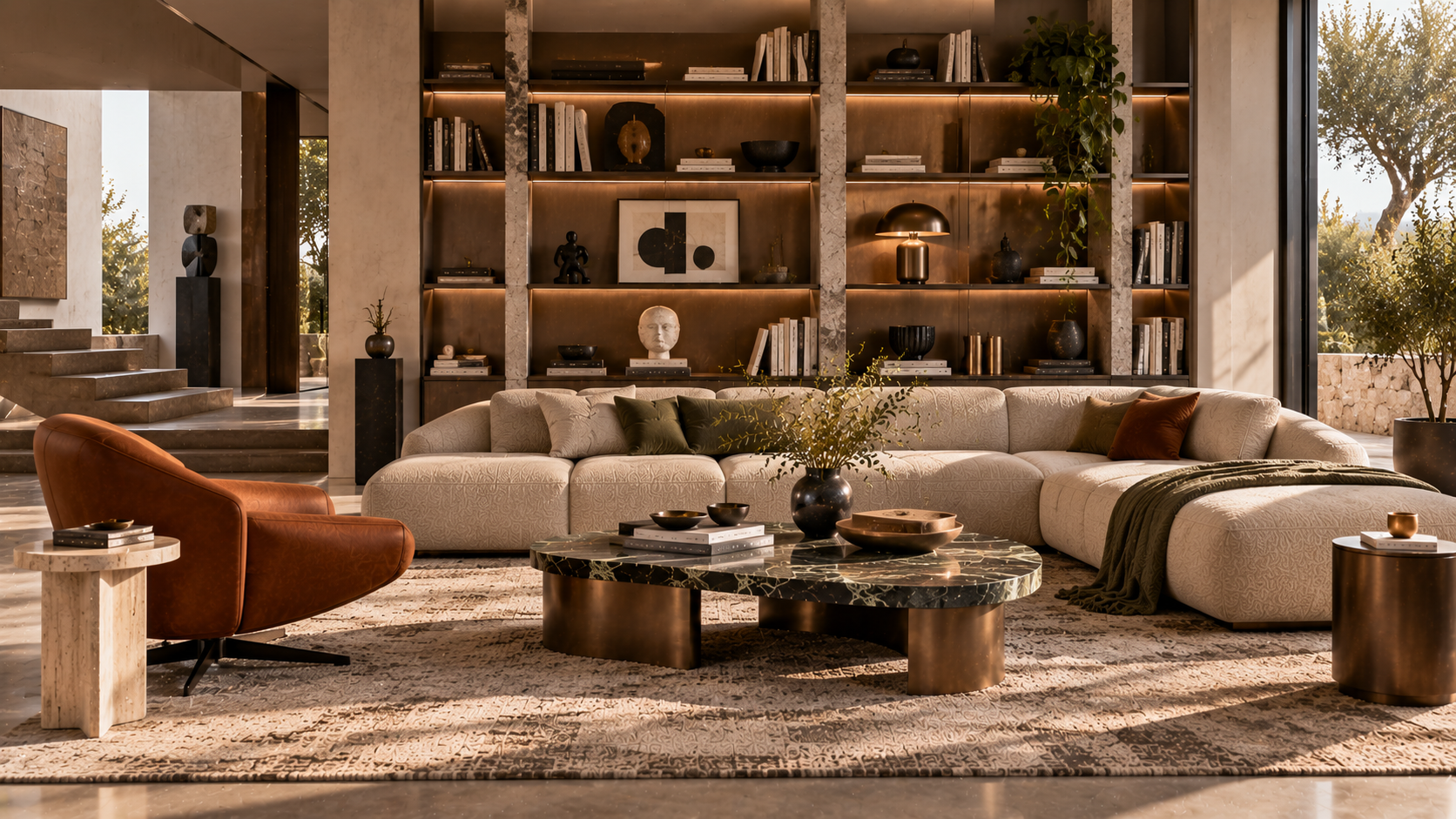
Modern Bookshelf Designs for Contemporary Living Rooms
A bookshelf does more than store books. It shapes the visual rhythm of a room, creates vertical structure and gives personal objects a place within the overall interior composition.
In contemporary homes, bookshelves have evolved from purely functional storage into design elements that influence how a space feels. The right bookshelf designs can frame a wall, define a corner or become a focal point within a living area.
Choosing the right piece depends on more than storage capacity. Scale, material, placement and the relationship with surrounding furniture all determine whether a bookshelf feels integrated or disconnected.
Understand the Role of the Bookshelf
Before selecting a bookshelf, consider what role it needs to play within the room.
Some spaces require storage that blends into the background, while others benefit from a stronger architectural element. A floor-to-ceiling unit can create height and structure, while a smaller modern bookshelf can add detail without overwhelming the room.
The purpose of the bookshelf should guide its design. A collection of books may require deeper shelves, while a display-focused unit may prioritise open sections for objects, artwork and decorative pieces.
A well-planned bookshelf should support the room rather than compete with other furniture.
Choose Between Open, Closed or Combined Storage
Open shelving creates a sense of openness and allows books and objects to become part of the interior. However, completely open storage requires thoughtful arrangement to avoid visual clutter.
Closed storage provides a cleaner appearance by concealing everyday items. A combination of both creates balance, allowing selected pieces to be displayed while maintaining a more organised look.
Many modern bookshelf designs use this combination approach, balancing practicality with visual appeal.
Explore RAVOH's storage collection to see how functional storage solutions can also contribute to the overall character of a room.
Consider Scale and Wall Proportion
A bookshelf should relate to the architecture around it.
A tall unit can emphasise ceiling height and create a strong vertical presence. A lower design can maintain openness and allow artwork or lighting to become part of the composition.
For a wall bookshelf design, consider the size of the wall, nearby furniture and available circulation space. A bookshelf that is too large may dominate the room, while one that is too small may lose its visual impact.
The best designs create a relationship between the furniture, the wall and the objects placed within them.
Use Materials to Add Character
Materials play an important role in how a bookshelf is experienced.
Wood introduces warmth and natural texture. Metal creates a lighter, more structured appearance. Veneer adds depth through grain variation, while mixed materials can create contrast without excessive decoration.
A refined modern bookcase design often relies on material quality and proportion rather than complicated detailing.
The Museum Collection by RAVOH demonstrates how materials such as veneer, metal, leather and marble can create a cohesive design language across furniture pieces.
Create Balance Between Display and Empty Space
A bookshelf does not need to be completely filled to feel complete.
Empty sections create visual pauses and allow individual objects to stand out. A combination of books, artwork and meaningful objects creates more depth than placing something in every available space.
For a bookshelf for living room placement, consider how the displayed items connect with the surrounding furniture. A ceramic object may complement a coffee table finish, while a metal accent may repeat details found elsewhere in the room.
The goal is to create rhythm rather than simply maximise storage.
Position the Bookshelf Around Daily Use
Placement affects both function and appearance.
A bookshelf near a reading chair can create a dedicated corner. In an open-plan space, it can help define the transition between living and dining areas. Against a feature wall, it can become a central visual element.
A contemporary bookshelf should support how the room is used while maintaining enough space for movement.
Consider lighting as well. Integrated lighting or carefully placed lamps can highlight objects and reveal material details after sunset.
Connect the Bookshelf with the Rest of the Room
The strongest interiors do not treat bookshelves as isolated pieces.
A bookshelf should relate to nearby furniture through colour, material or proportion. It does not need to match the sofa or table exactly, but it should feel like part of the same design language.
This is especially important in contemporary living rooms, where different functions often share one connected space.
Explore RAVOH's collections to understand how different furniture categories can work together through consistent materials and refined forms.
Design for Longevity
The best bookshelf designs are not only shaped by current trends. They are created around lasting principles — thoughtful proportions, durable materials and flexibility of use.
A bookshelf should have enough character to define the room while remaining adaptable as collections, objects and lifestyles change over time.
For those looking to create a more considered living space, explore RAVOH's Gurugram showroom to experience furniture proportions, materials and finishes at full scale.